Slow nasal breathwork
Also called long-exhale breathing, diaphragmatic constructive rest or evening parasympathetic downshift.
Before you start
- No equipment
Position
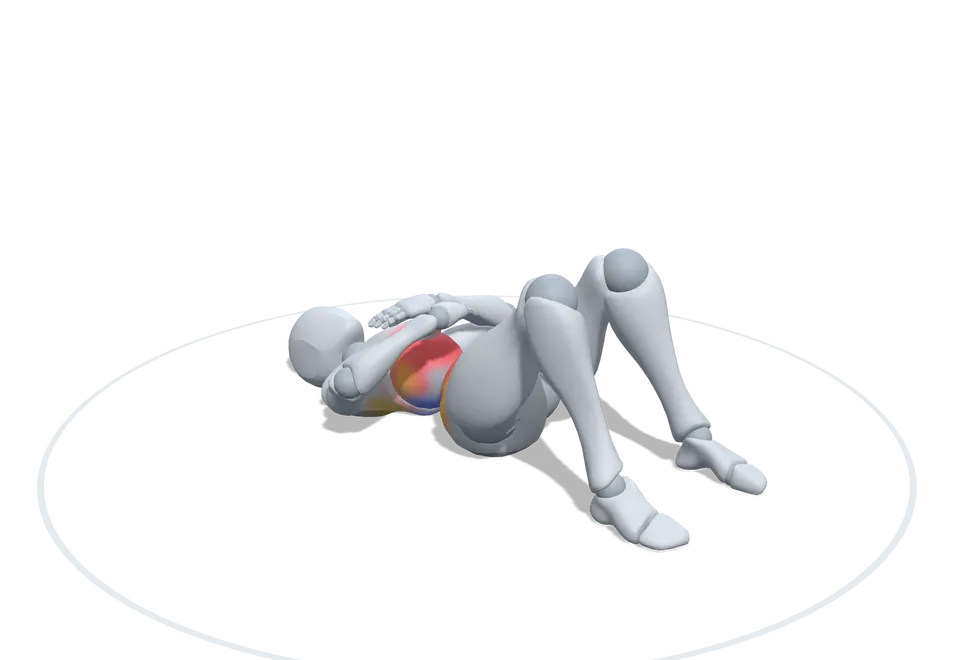
Lie on your back with knees bent so your lower back melts flat for bedtime downshifting, or sit tall on a cork block after spinal drills.
- Constructive rest On your back
- Lie supine with knees bent and feet planted, resting one hand on your breastbone and the other over your lower ribs and navel.
- Seated tall Cross-legged
- Sit cross-legged with your hips slightly elevated on a cork block or cushion so your spine stacks effortlessly without lower-back effort.
Muscles it works
Hover or tap a muscle to light up only that one.
Primarydoes most of the work
Secondaryhelps
Stabilizerskeep you steady
Do
Tap one to see it marked on the body.
Feel your lower ribs expand softly sideways and into the mat on the 4-second nasal inhale without lifting your collarbones.
Let your ribs settle naturally toward your hips over 6 unhurried seconds to cue your heart rate down for sleep.
Breathe silently enough that you would barely stir a feather under your nostrils.
Don't
Tap one to watch the mistake. The green shadow shows where you should be.
What it looks likeYour top hand and collarbones rise sharply on every breath while your belly stays tight.
Why it mattersUses neck stress muscles and keeps your nervous system alert instead of winding down.
FixTake smaller, quieter breaths aimed down under your lower hand.
What it looks likeYour lumbar spine arches high off the floor every time you breathe in.
Why it mattersTightens your lower-back extensors instead of letting your diaphragm dome cleanly.
FixTake only a comfortable 70 percent inhale while keeping your back ribs heavy on the floor.
What it looks likeThe back of your neck shortens and your chin points past vertical.
Why it mattersNarrows your airway and encourages dry mouth breathing.
FixLengthen the back of your neck slightly or place a thin folded towel under your skull.